
Business leaders across the United States face unprecedented challenges in staying competitive. Technology evolves rapidly while customer expectations continue rising. Companies struggle to manage vast amounts of data effectively. Operations demand greater efficiency and automation capabilities.
Artificial intelligence offers transformative potential for organizations ready to embrace innovation. Strategic implementation can revolutionize operations, enhance customer experience, and unlock new value streams. The right partner makes all the difference in your transformation journey.
Ready to Transform Your Business?
Connect with our AI consulting experts today. We serve companies nationwide with proven strategies and measurable results.
Why AI Consulting Delivers Business Value
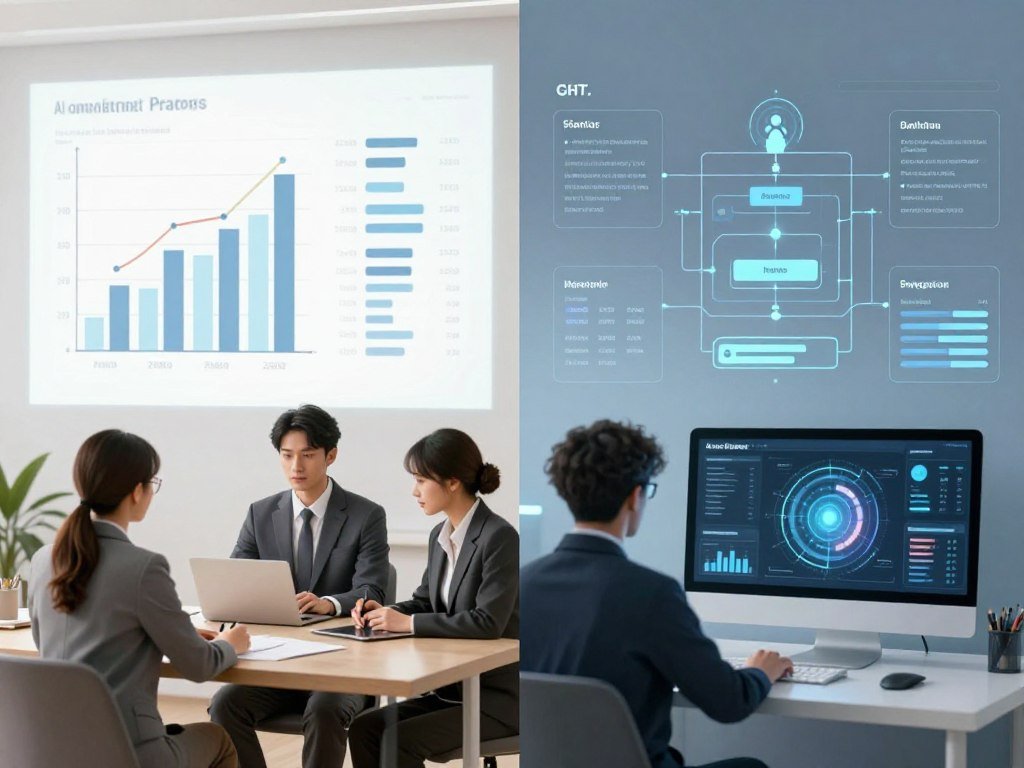
Organizations invest in consulting services to bridge the gap between potential and reality. Artificial intelligence technology promises significant returns but demands specialized expertise for successful deployment. Many companies lack internal capabilities to design and implement effective strategies.
Expert guidance accelerates transformation while minimizing risk and cost. Consultants bring proven methodologies developed across multiple industries and implementations. This experience helps clients avoid common pitfalls and achieve faster time to value.
Strategic Business Impact
Consulting partners assess your unique business challenges and identify high-impact opportunities. They design solutions aligned with organizational goals rather than implementing technology for its own sake. This approach ensures investments deliver measurable returns.
Teams gain access to specialized knowledge spanning machine learning, automation, data analytics, and enterprise systems integration. Consultants transfer this knowledge to internal staff through hands-on collaboration.

Competitive Advantages Through Intelligence
Leaders who embrace artificial intelligence gain significant advantages over competitors who delay. Automation reduces operational costs while improving accuracy and speed. Advanced analytics reveal insights hidden in data, enabling better decision-making.
Customer experience improves through personalization and responsive service delivery. Supply chain operations become more efficient and resilient. Marketing efforts achieve better targeting and conversion rates.
- Reduce operational costs by 20-40% through intelligent automation
- Improve decision-making with predictive analytics and real-time insights
- Enhance customer satisfaction through personalized experiences
- Accelerate innovation cycles with AI-powered research and development
- Strengthen risk management through advanced monitoring systems
- Scale operations efficiently without proportional cost increases
Comprehensive AI Consulting Services
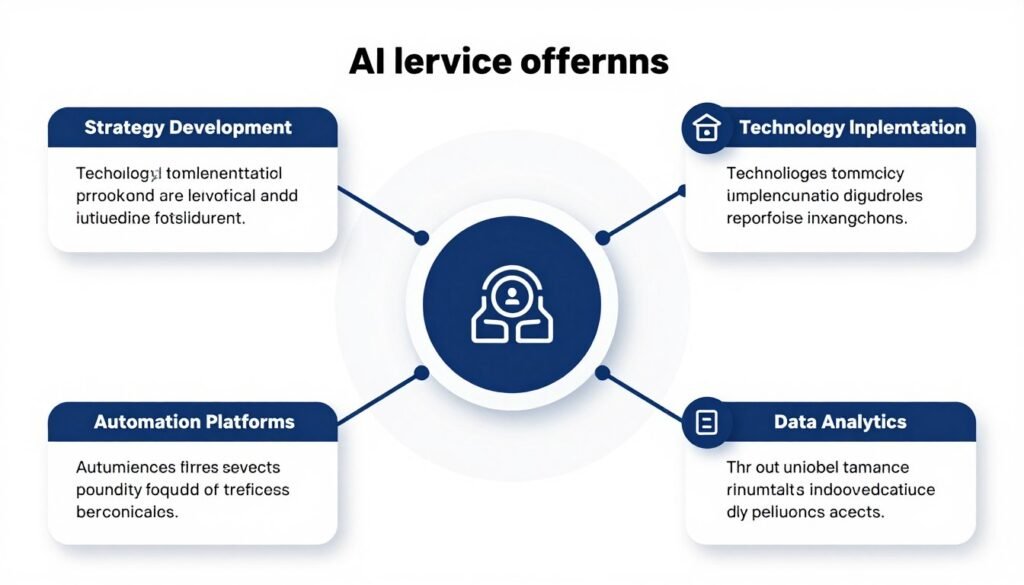
Successful transformation requires comprehensive capabilities spanning strategy development through ongoing optimization. Our services cover the entire artificial intelligence lifecycle. Each engagement addresses specific business needs while building long-term organizational capabilities.
AI Strategy and Roadmap Development
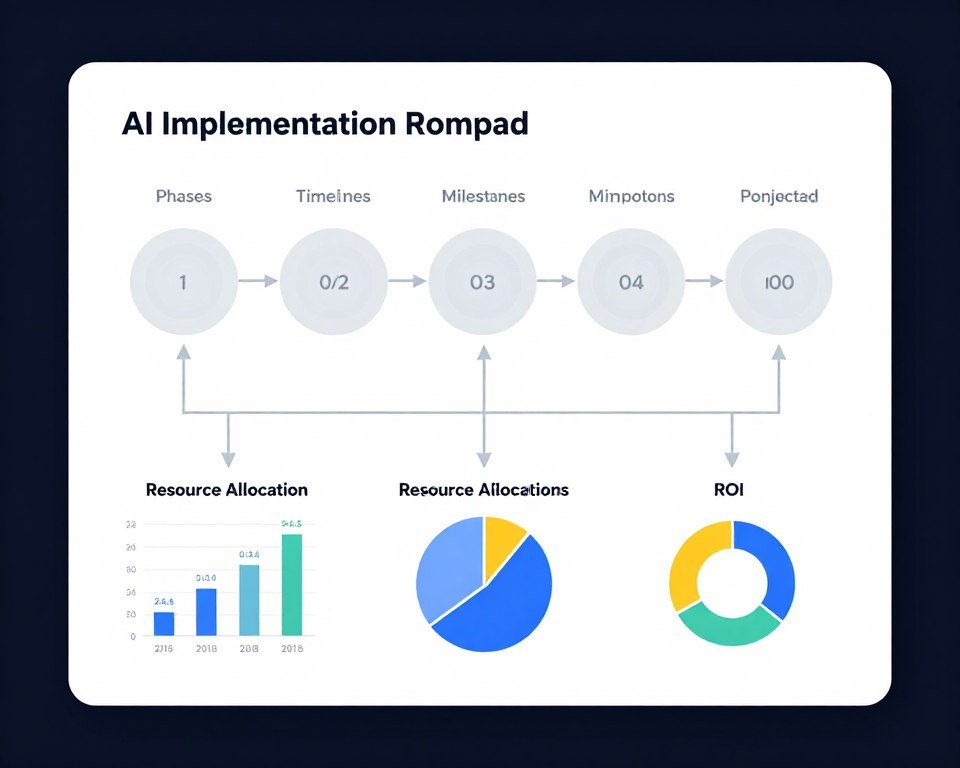
Organizations need clear direction before investing in technology. Strategic planning identifies opportunities aligned with business objectives. We assess current capabilities, market position, and competitive landscape.
Roadmaps prioritize initiatives based on potential impact and feasibility. This approach ensures resources focus on high-value projects. Teams gain clarity on timelines, required investments, and expected outcomes.
Governance frameworks establish accountability and decision-making processes. Change management strategies prepare organizations for transformation. Risk mitigation plans address potential challenges proactively.
Technology Implementation and Integration
Turning strategy into reality requires technical expertise and project management excellence. Implementation services deploy artificial intelligence solutions into existing enterprise environments. Integration ensures new capabilities work seamlessly with current systems.
Platform selection matches technology choices to specific business requirements. Cloud infrastructure provides scalable, cost-effective computing resources. Data pipelines connect information sources to analytics and machine learning models.
Machine Learning Solutions
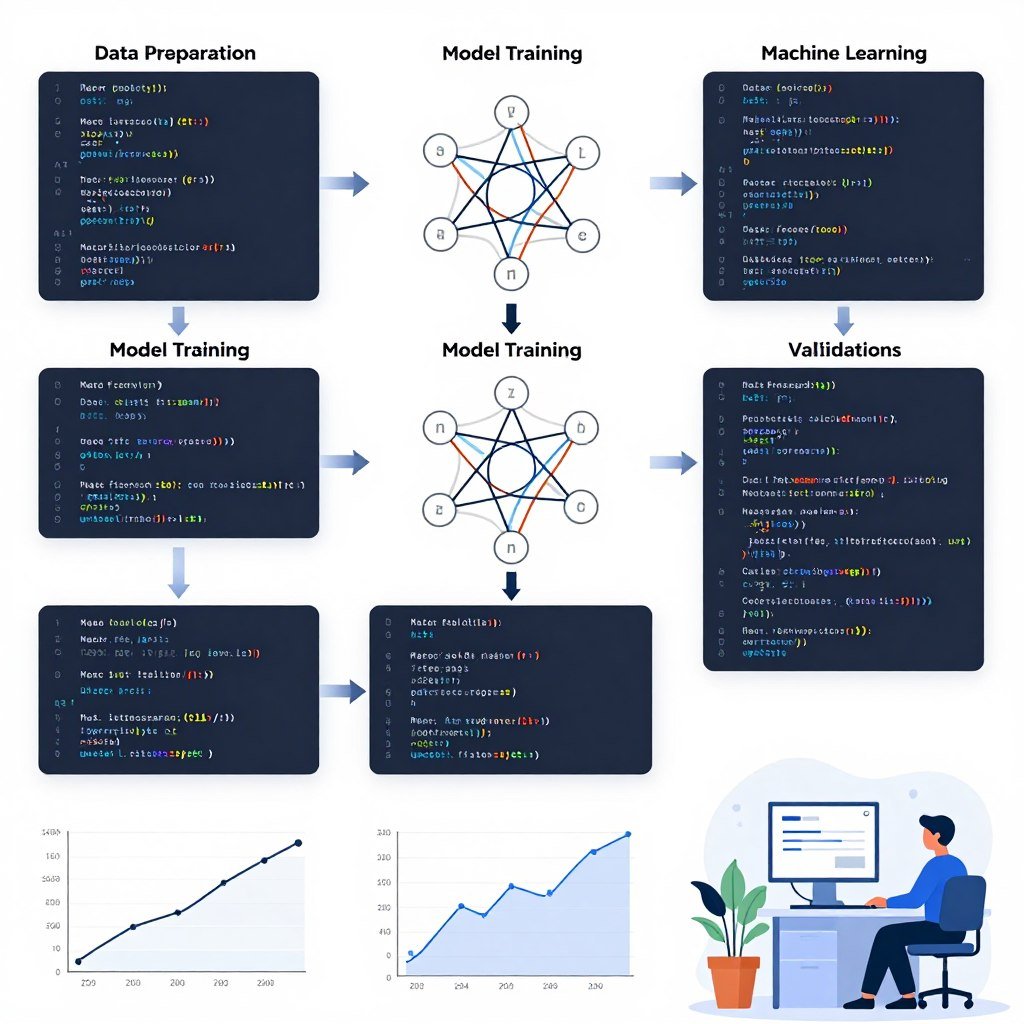
Custom models address unique business challenges from demand forecasting to quality control. Teams leverage advanced algorithms while maintaining explainability and governance. Continuous learning improves accuracy over time.
Intelligent Automation
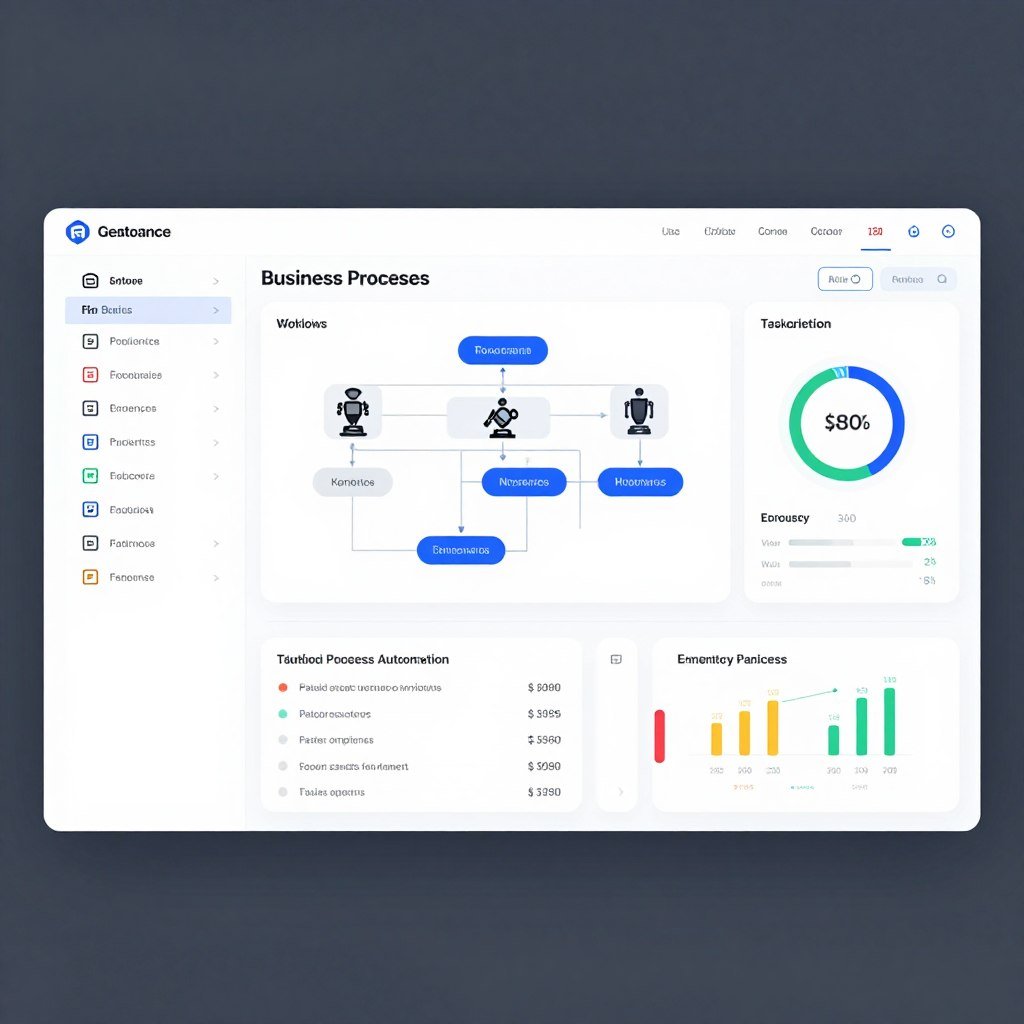
Robotic process automation handles repetitive tasks with speed and accuracy. Intelligent agents combine automation with decision-making capabilities. Workflows optimize end-to-end processes across departments and systems.
Enterprise Integration
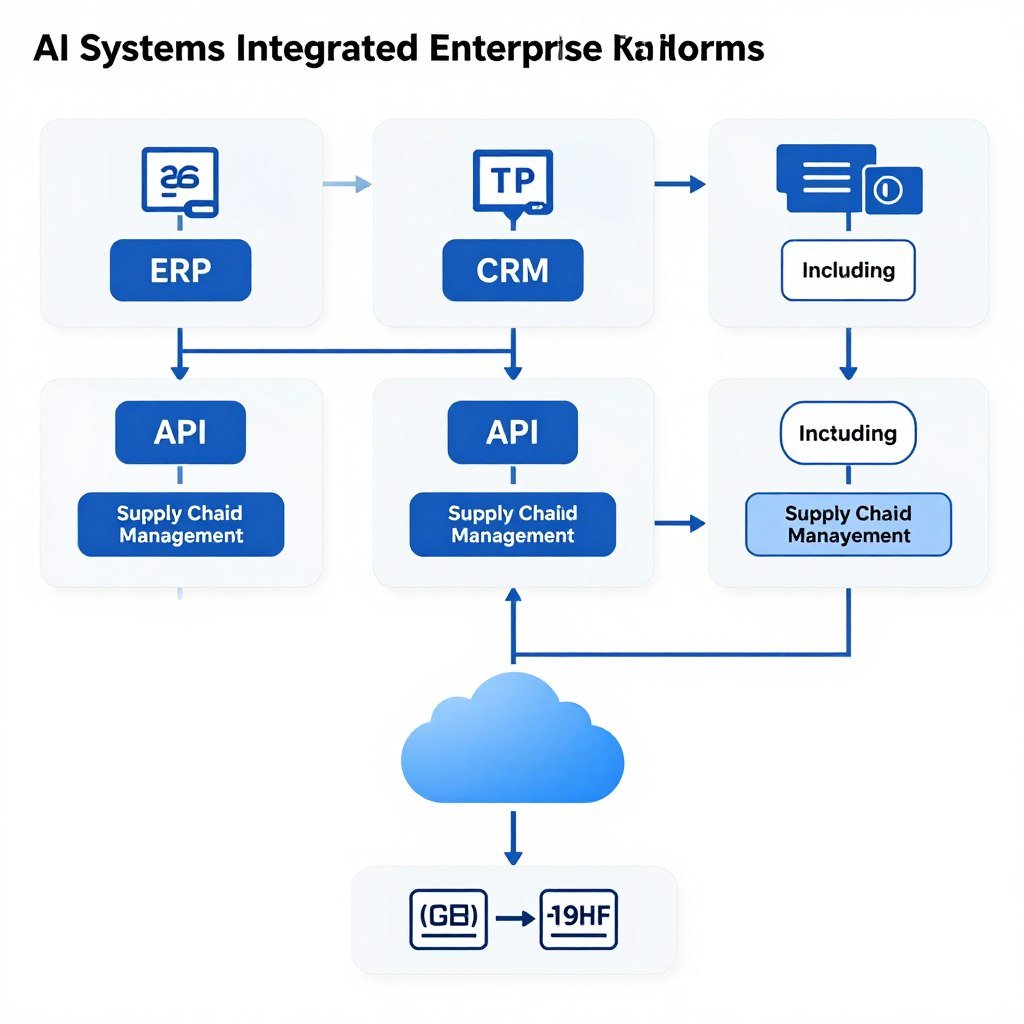
Solutions connect with existing ERP, CRM, and operational systems. APIs enable data exchange and process orchestration. Legacy system modernization unlocks value from historical investments while adding new capabilities.
Discuss Your AI Implementation Needs
Our consultants help design and deploy solutions tailored to your business. Schedule a consultation to explore implementation approaches.
Data Analytics and Insights
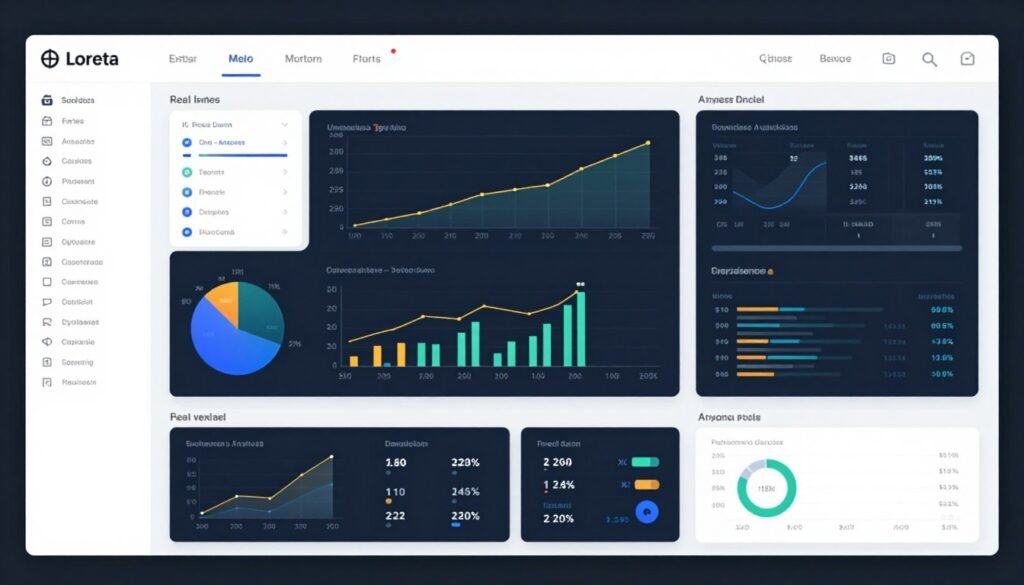
Data represents the foundation of artificial intelligence capabilities. Analytics services transform raw information into actionable insights. Organizations gain visibility into operations, customers, and market dynamics.
Predictive models forecast future trends and behaviors. Prescriptive analytics recommend optimal actions based on current conditions. Real-time monitoring enables rapid response to changing situations.
- Customer behavior analysis reveals preferences and purchase patterns
- Operational analytics identify efficiency opportunities and bottlenecks
- Financial forecasting improves planning accuracy and resource allocation
- Supply chain optimization reduces costs and improves service levels
- Risk detection systems flag potential issues before they escalate
- Market intelligence tracks competitive dynamics and emerging trends
Industry-Specific AI Solutions
Different sectors face unique challenges requiring tailored approaches. Industry expertise ensures solutions address specific operational realities and regulatory requirements. Our consultants bring deep knowledge across multiple verticals.
Manufacturing and Operations
Production environments benefit from predictive maintenance, quality control automation, and supply chain optimization. Intelligence systems reduce downtime and waste while improving output quality.
- Predictive equipment maintenance prevents costly failures
- Computer vision inspects products with superhuman accuracy
- Demand forecasting optimizes inventory and production scheduling
- Supply chain visibility tracks materials and finished goods
Financial Services
Banks and insurance companies leverage intelligence for risk management, fraud detection, and customer service enhancement. Automation accelerates processes while maintaining compliance and accuracy.
- Fraud detection identifies suspicious transactions in real-time
- Credit risk models improve lending decisions
- Chatbots handle routine customer inquiries efficiently
- Regulatory compliance automation reduces manual effort
Retail and E-Commerce
Customer experience drives retail success in competitive markets. Personalization engines recommend products based on behavior and preferences. Dynamic pricing optimizes revenue while remaining competitive.
- Personalized product recommendations increase conversion rates
- Inventory optimization balances stock levels across locations
- Price optimization maximizes margins and competitiveness
- Customer service agents provide instant, accurate support
Healthcare and Life Sciences
Medical organizations improve patient outcomes while managing costs through intelligent systems. Diagnostic support helps clinicians make better decisions. Administrative automation reduces burden on healthcare workers.
- Diagnostic imaging analysis assists radiologists and specialists
- Patient risk stratification enables proactive interventions
- Drug discovery acceleration reduces development timelines
- Administrative workflow automation frees clinical staff time
Our Business Transformation Approach
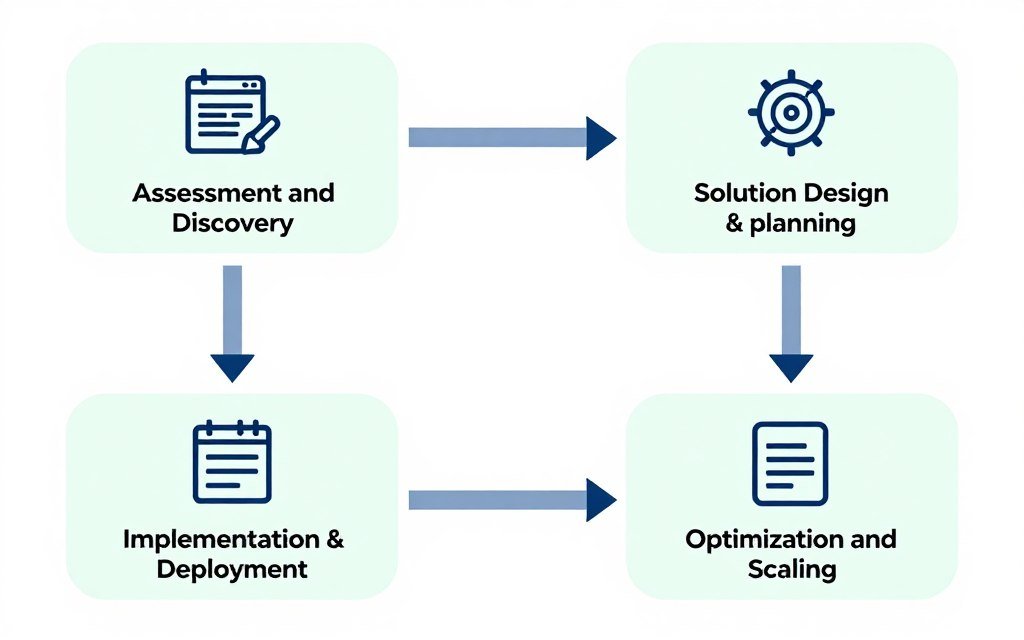
Successful transformation follows proven methodologies while adapting to organizational context. Our approach balances speed with sustainability. Clients achieve quick wins while building long-term capabilities.
Discovery and Assessment
Engagements begin with thorough understanding of business goals, challenges, and current state. Teams conduct interviews with stakeholders across functions. Technical assessments evaluate existing systems, data, and infrastructure.
Opportunity identification workshops uncover high-impact use cases. Feasibility analysis determines which initiatives offer best returns with acceptable risk. Prioritization frameworks guide investment decisions.
Assessment Components
- Business process mapping identifies automation opportunities
- Data quality evaluation determines readiness for analytics
- Technology infrastructure assessment reviews capabilities and gaps
- Skills inventory identifies training and hiring needs
- Competitive benchmarking reveals best practices and standards
- Regulatory review ensures compliance considerations

Solution Design and Planning
Design phases translate opportunities into concrete implementation plans. Architecture blueprints specify technology components and integration points. User experience design ensures solutions meet practical needs of people using them daily.
Project plans outline timelines, resource requirements, and milestones. Change management strategies prepare organizations for new ways of working. Risk mitigation addresses potential obstacles proactively.
Speak with Our Transformation Experts
Implementation and Deployment

Execution brings designs to life through iterative development and deployment. Agile methodologies enable rapid progress with continuous stakeholder feedback. Pilot programs validate approaches before full-scale rollout.
Integration work connects new capabilities with existing enterprise systems. Testing ensures solutions meet functional requirements and performance standards. Training programs build user competence and confidence.
Optimization and Scaling
Initial deployment represents the beginning rather than end of value creation. Monitoring systems track performance against defined metrics. Continuous improvement processes identify enhancement opportunities.
Scaling strategies expand successful pilots across additional use cases and business units. Knowledge transfer ensures internal teams can maintain and evolve solutions independently. Governance structures sustain benefits over time.
Advanced Technology Capabilities
Consulting effectiveness depends on mastery of current technologies and platforms. Our teams maintain expertise across the artificial intelligence landscape. This knowledge enables optimal technology selection and implementation.
Machine Learning and Deep Learning
Models learn patterns from data to make predictions and decisions. Supervised learning trains on labeled examples for classification and regression tasks. Unsupervised learning discovers hidden structures in unlabeled data.
Deep learning neural networks handle complex tasks like image recognition and natural language processing. Transfer learning accelerates development by leveraging pre-trained models. Reinforcement learning optimizes sequential decision-making.
Natural Language Processing
Language understanding enables machines to interpret and generate human communication. Sentiment analysis gauges customer opinions from reviews and social media. Named entity recognition extracts key information from documents.
Chatbots and virtual agents handle customer service interactions. Document processing automates information extraction from contracts and forms. Translation services break down language barriers in global operations.
Computer Vision and Image Recognition

Visual perception systems analyze images and video for various business applications. Quality control inspects products for defects with greater consistency than human inspectors. Security systems identify people and detect anomalous behaviors.
Autonomous vehicles navigate using vision combined with other sensors. Medical imaging analysis assists healthcare providers with diagnosis. Retail analytics track customer behavior and inventory on shelves.
Robotic Process Automation
Software robots execute repetitive digital tasks following defined rules. Processes run faster with zero errors while freeing employees for higher-value work. Integration with existing applications requires no system changes.
Predictive Analytics
Statistical models forecast future events based on historical patterns. Demand prediction optimizes inventory and production. Churn models identify customers at risk of leaving. Maintenance predictions prevent equipment failures.
Recommendation Systems
Engines suggest products, content, or actions based on user behavior and preferences. E-commerce platforms increase sales through personalized suggestions. Content platforms improve engagement with relevant recommendations.
Enterprise Platform and Cloud Expertise
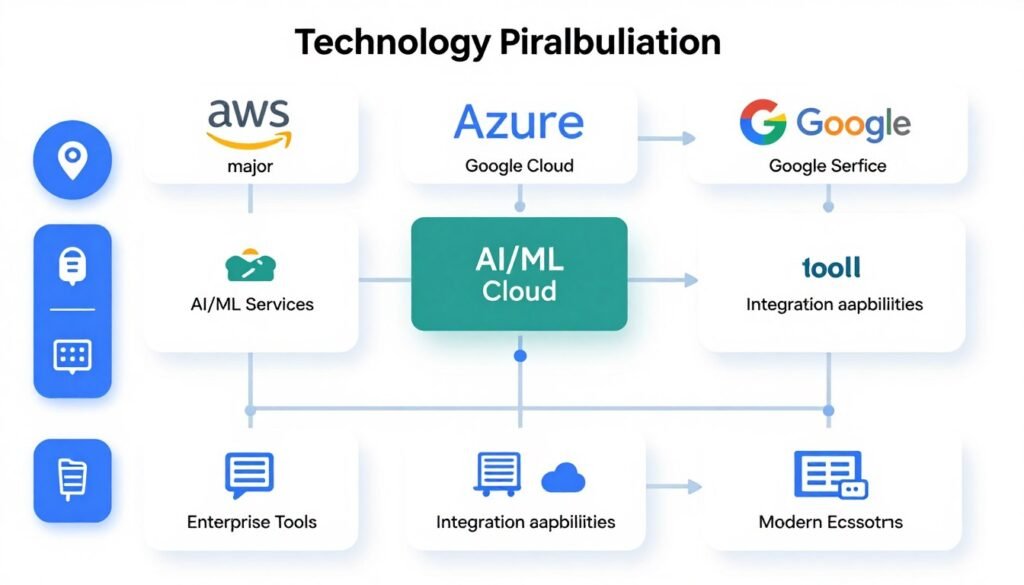
Platform selection significantly impacts project success and long-term value. Enterprise-grade solutions provide reliability, security, and scalability. Cloud services offer flexibility and rapid deployment capabilities.
Cloud Platform Capabilities
Major cloud providers deliver comprehensive artificial intelligence and machine learning services. These platforms eliminate infrastructure management complexity. Organizations access cutting-edge capabilities without massive upfront investments.
Amazon Web Services offers extensive ML services including SageMaker for model development. Microsoft Azure provides integrated tools spanning cognitive services to custom models. Google Cloud Platform emphasizes data analytics and AI APIs.
- Scalable compute resources handle varying workloads efficiently
- Managed services reduce operational overhead and complexity
- Global infrastructure ensures performance and availability
- Security and compliance features meet enterprise requirements
- Pay-as-you-go pricing aligns costs with actual usage
- Integration capabilities connect cloud and on-premises systems
Enterprise Software Integration
Artificial intelligence enhances existing enterprise applications rather than replacing them. Integration brings intelligence to familiar workflows and processes. Users gain new capabilities without learning entirely new systems.
Customer relationship management platforms incorporate predictive lead scoring and opportunity forecasting. Enterprise resource planning systems optimize inventory and production scheduling. Supply chain management improves with demand sensing and logistics optimization.
Explore Platform Options for Your Business
Our platform experts help evaluate and select technologies aligned with your requirements and existing infrastructure.
Building Strong Data Foundations
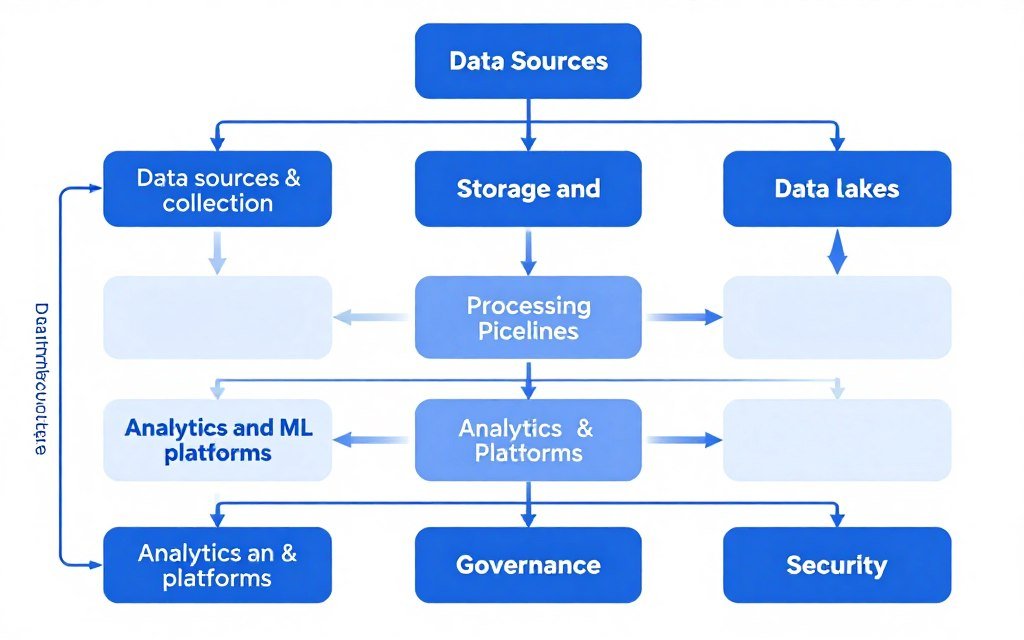
Data quality determines artificial intelligence effectiveness more than algorithm sophistication. Organizations must establish solid foundations before pursuing advanced analytics. Our data services address the full information lifecycle.
Data Strategy and Governance
Strategic frameworks guide data collection, storage, and usage. Governance policies ensure quality, security, and compliance. Clear ownership and accountability prevent organizational confusion.
Master data management creates single sources of truth for critical entities. Metadata catalogs help people discover and understand available information. Privacy and security controls protect sensitive data while enabling appropriate access.
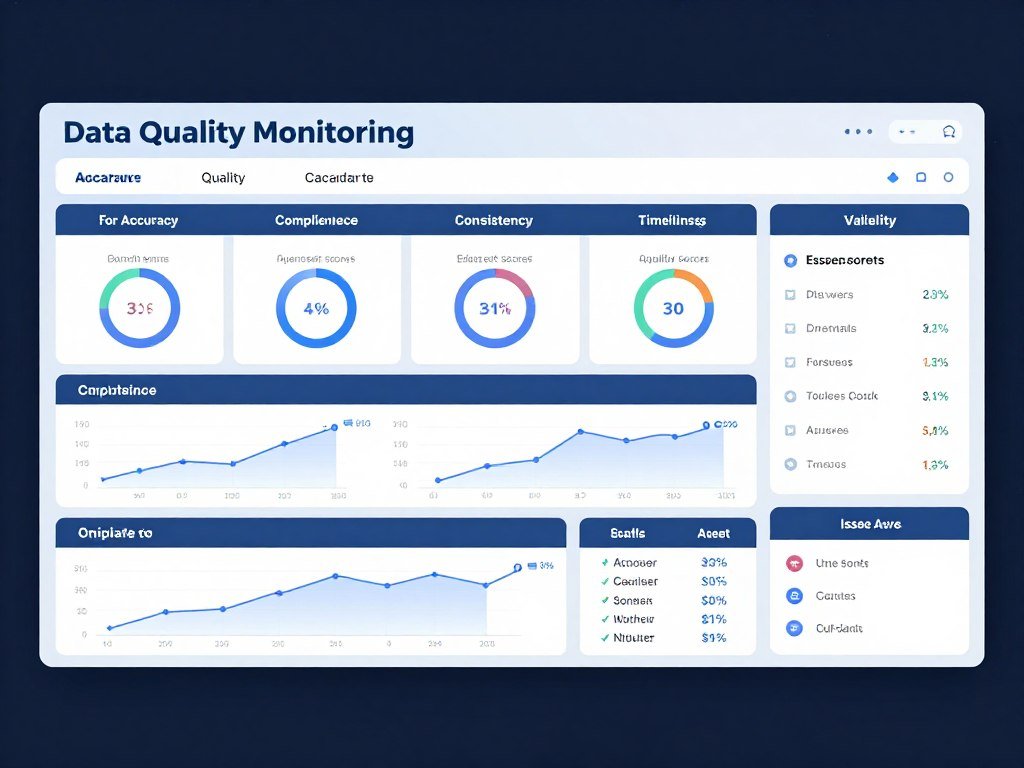
Data Quality Management
Quality issues undermine analytics accuracy and decision-making confidence. Profiling identifies problems in existing datasets. Cleansing processes correct errors and inconsistencies. Ongoing monitoring prevents quality degradation over time.
Analytics Infrastructure
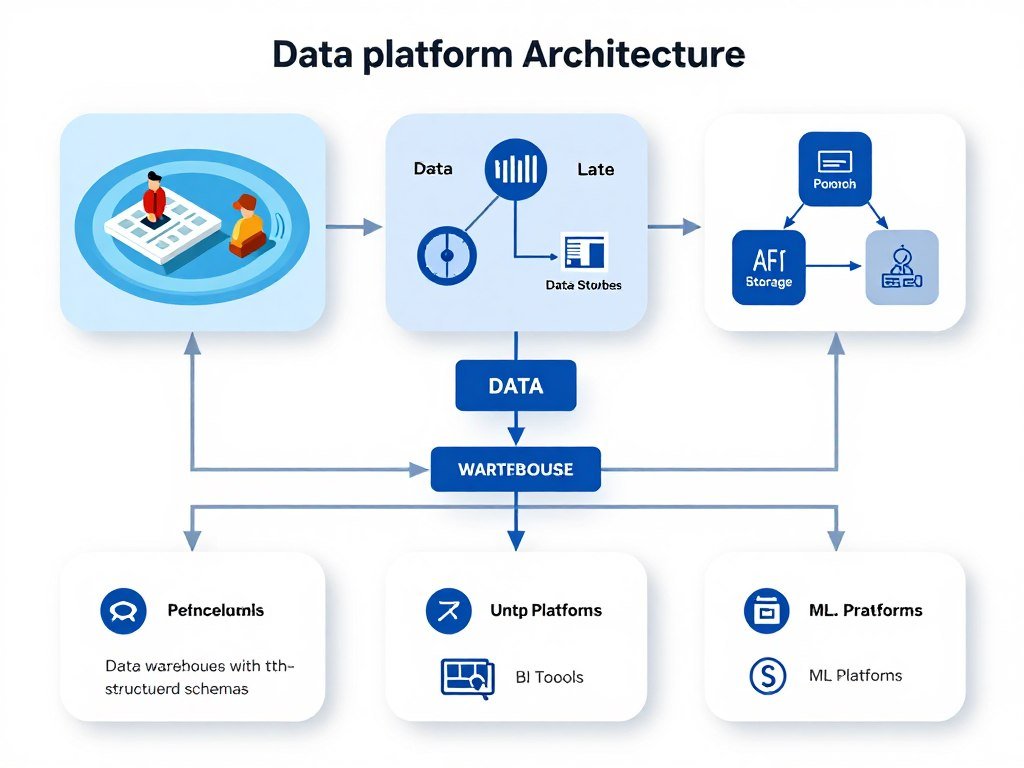
Modern data platforms handle diverse information types at massive scale. Data lakes store raw information in native formats. Warehouses provide structured access for business intelligence. Processing pipelines transform and enrich data for analytics.
Organizational Change and Adoption
Technology implementation succeeds or fails based on people embracing new ways of working. Change management ensures organizations realize intended benefits. Our approach addresses human dimensions alongside technical aspects.
Stakeholder Engagement
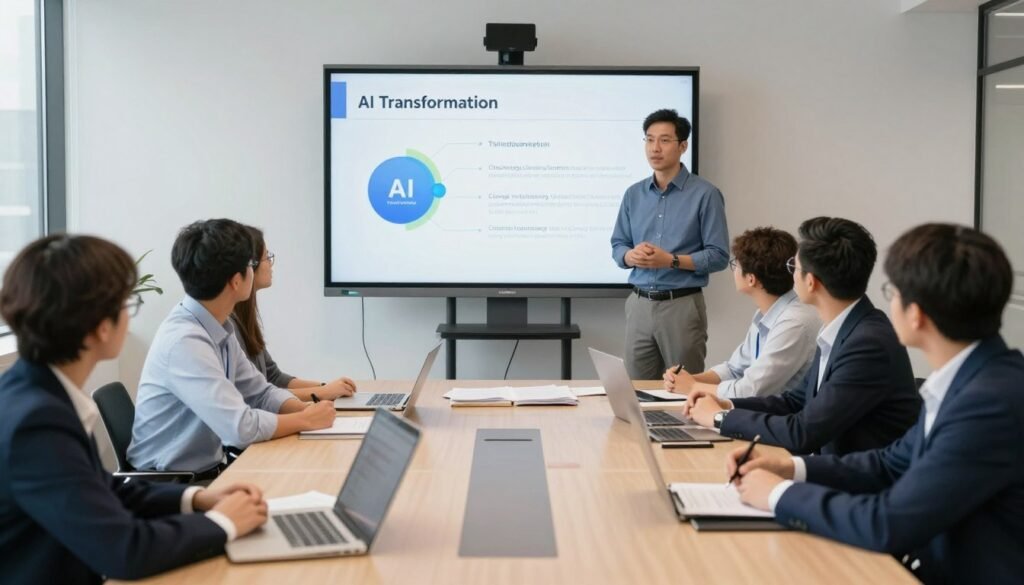
Early involvement builds support and identifies concerns before they become obstacles. Communication strategies keep stakeholders informed throughout initiatives. Feedback mechanisms ensure voices get heard and addressed.
Executive sponsorship demonstrates commitment and provides resources. Champions within business units advocate for changes among peers. User participation in design ensures solutions meet practical needs.
Training and Capability Building
New capabilities require new skills across technical and business roles. Training programs build competence appropriate to different user groups. Hands-on learning accelerates adoption more effectively than classroom theory alone.
Technical teams learn to develop, deploy, and maintain artificial intelligence solutions. Business users understand how to leverage insights and automation in daily work. Leaders gain strategic perspective on intelligence opportunities and implications.
- Role-based training addresses specific job responsibilities
- Hands-on exercises build practical skills with real scenarios
- Documentation and job aids support ongoing reference
- Coaching provides personalized guidance for complex topics
- Communities of practice enable peer learning and support
- Certification programs validate competency achievements
Questions About Change Management?
Risk Management and AI Governance
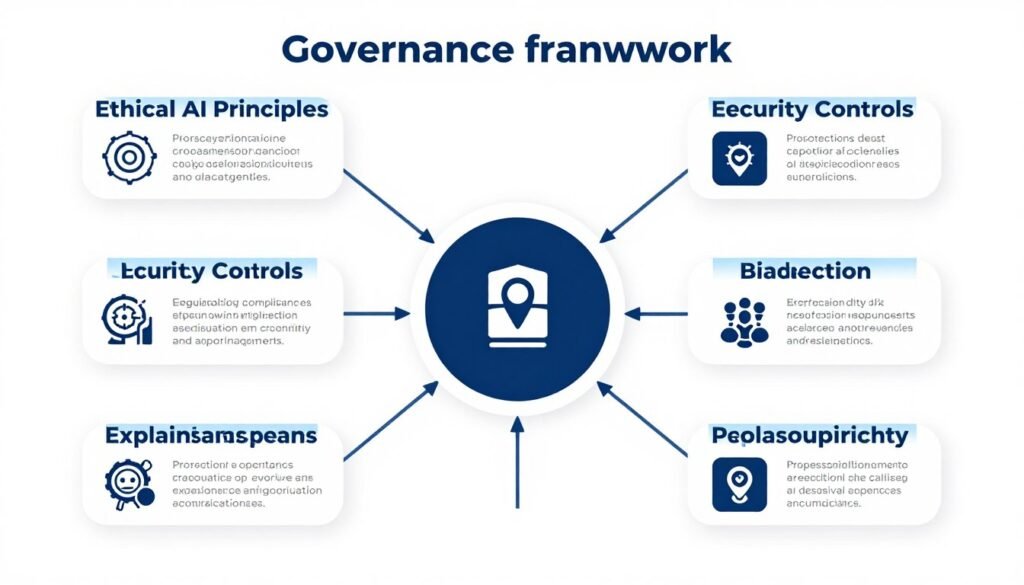
Artificial intelligence introduces new risks requiring thoughtful governance. Organizations must balance innovation with responsibility. Our governance frameworks address technical, ethical, and regulatory dimensions.
Ethical AI Principles
Responsible development considers fairness, transparency, and accountability. Bias detection identifies and mitigates unfair discrimination in models. Explainability ensures decisions can be understood and justified.
Privacy protection goes beyond compliance to respect individual rights. Human oversight maintains accountability for automated decisions. Regular audits verify systems operate as intended.
Regulatory Compliance
Industries face varying regulatory requirements affecting artificial intelligence deployment. Financial services must address model risk management and fair lending rules. Healthcare organizations navigate HIPAA privacy requirements. European operations comply with GDPR data protection standards.
Compliance programs map requirements to technical controls and processes. Documentation demonstrates adherence during audits and examinations. Regular reviews adapt to evolving regulatory expectations.
Security and Privacy
Intelligence systems access sensitive business and customer data requiring protection. Encryption secures data in transit and at rest. Access controls limit exposure to authorized individuals. Monitoring detects potential security incidents.
Model Risk Management
Incorrect predictions can lead to poor business decisions and losses. Validation processes verify model accuracy before deployment. Monitoring tracks performance degradation over time. Governance reviews approve high-impact applications.
Measuring Business Value and ROI
Investments demand demonstrated returns to justify continued support and expansion. Measurement frameworks quantify value across financial and operational dimensions. Our approach establishes baselines, tracks progress, and reports results.
Defining Success Metrics
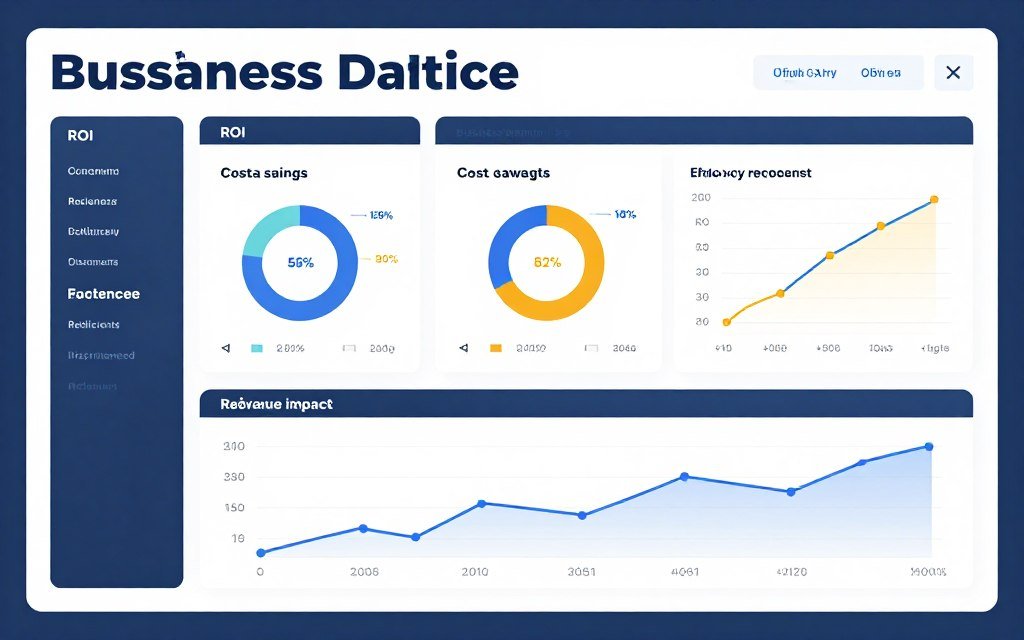
Metrics align with specific business objectives for each initiative. Cost reduction measures savings from automation and efficiency improvements. Revenue impact tracks sales increases from better customer targeting. Operational metrics monitor process improvements and quality enhancements.
Leading indicators provide early visibility into emerging results. Lagging indicators confirm ultimate business impact. Balanced scorecards present comprehensive performance views.
- Return on investment (ROI) and payback period
- Cost savings from automation and efficiency
- Revenue growth from improved conversions
- Margin improvements through optimization
Financial Metrics
- Process cycle time reductions
- Error rate and quality improvements
- Productivity increases per employee
- Customer satisfaction scores
Operational Metrics
- Time to market for new products
- Competitive positioning improvements
- Innovation capability enhancements
- Market share changes
Strategic Metrics
Continuous Improvement
Performance monitoring identifies optimization opportunities post-deployment. Regular reviews assess results against targets and identify gaps. Feedback loops incorporate learnings into subsequent iterations.
Experimentation culture tests hypotheses and validates improvements. A/B testing compares alternative approaches objectively. Scaling successful innovations maximizes value realization.
Selecting the Right AI Consulting Partner

Partner choice significantly impacts transformation success. The right consultant brings relevant expertise, proven methodologies, and cultural fit. Organizations should evaluate several dimensions when making selection decisions.
Key Evaluation Criteria
Industry experience demonstrates understanding of sector-specific challenges and regulations. Technical capabilities span required technologies and platforms. Delivery track record shows successful project completion and value realization.
Cultural alignment ensures productive collaboration and shared values. Scale and resources indicate ability to support initiatives from pilot through enterprise deployment. Knowledge transfer commitment builds internal capabilities rather than creating dependency.
- Proven experience in your industry with relevant case studies
- Technical depth across artificial intelligence technologies
- Successful delivery track record with measurable client outcomes
- Collaborative approach that builds internal capabilities
- Flexible engagement models adapting to your needs
- Strong references from similar organizations
Partner with Proven AI Consulting Experts
We bring deep expertise, proven methodologies, and commitment to your success. Let’s discuss how we can support your transformation journey.
Serving Businesses Nationwide
Organizations across the United States face similar transformation challenges regardless of location. Our team serves clients from coast to coast with consistent quality and expertise. Geographic reach combines with local market understanding.
Remote collaboration technologies enable effective engagement without constant travel. Virtual workshops, online training, and digital project management maintain productivity. On-site presence supplements remote work when hands-on involvement adds value.
We serve organizations across all 50 states with expert AI consulting services
Reach Us Anywhere in the United States
Regional Expertise with National Scale
Our consultants understand regional business environments and industry concentrations. Technology hubs benefit from cutting-edge innovation expertise. Manufacturing regions leverage operational excellence knowledge. Financial centers access deep regulatory and compliance experience.
National presence enables resource flexibility and knowledge sharing. Teams collaborate across geography to solve complex challenges. Best practices flow quickly throughout the organization and to clients.
Getting Started with AI Transformation

Starting transformation journeys feels overwhelming for many organizations. Breaking initiatives into manageable phases builds momentum while managing risk. Our structured approach provides clear path forward from first conversation through value realization.
Initial Consultation Process
Conversations begin with understanding your business situation and objectives. We discuss current challenges, competitive pressures, and strategic priorities. This context helps identify where artificial intelligence creates most value.
Preliminary opportunity assessment highlights potential use cases worth deeper exploration. We share relevant experience from similar organizations and industries. Conversations clarify what success looks like and how to measure progress.
- Schedule initial discussion to explore needs and opportunities
- Conduct discovery sessions with key stakeholders
- Develop preliminary opportunity assessment and recommendations
- Design detailed project proposal with scope, timeline, and investment
- Launch engagement with kickoff and team mobilization
- Execute project phases with regular progress reviews
Engagement Models and Investment
Flexible engagement approaches adapt to different organizational needs and preferences. Strategic advisory provides ongoing guidance and direction. Project-based work delivers specific implementations with defined scope. Staff augmentation adds specialized expertise to internal teams.
Investment levels vary based on scope, complexity, and duration. Pilot projects demonstrate value with manageable commitment. Enterprise transformations require larger investment delivering proportional returns. We work with clients to structure engagements matching business cases and available resources.
Quick Start Packages
Rapid assessment and pilot implementation prove value quickly. These engagements typically run 8-12 weeks focusing on specific use cases. Results inform broader transformation roadmaps.
Enterprise Programs
Comprehensive transformation initiatives span multiple quarters or years. These programs address strategy, technology, process, and organizational change. Phased delivery maintains progress while managing complexity.
Client Success Stories
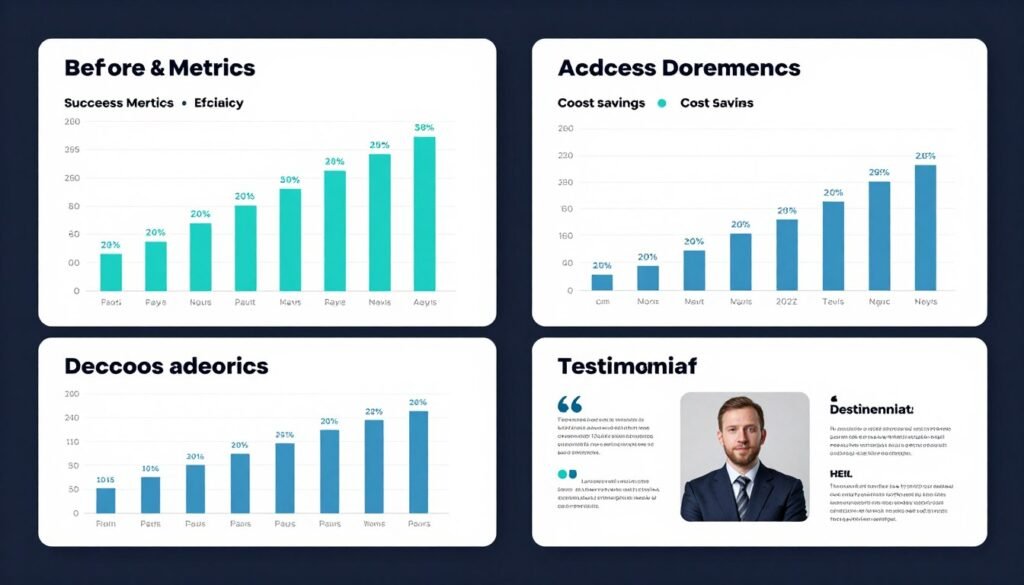
Real-world results demonstrate consulting value better than promises. Our clients achieve measurable improvements across operations, customer experience, and financial performance. These examples illustrate transformation potential across industries.
Manufacturing Efficiency Transformation
A mid-sized manufacturer struggled with quality issues and production inefficiencies. Computer vision systems now inspect 100% of products versus previous sampling approach. Predictive maintenance reduced unplanned downtime by 35 percent. Supply chain optimization decreased inventory costs while improving service levels.
The company invested in foundational capabilities enabling multiple use cases. Initial pilot proved value within four months. Enterprise rollout scaled solutions across five facilities over 18 months. Total ROI exceeded 300 percent within two years.
Financial Services Customer Experience
A regional bank wanted to improve customer service while controlling costs. Intelligent virtual agents now handle 60 percent of routine inquiries without human intervention. Remaining interactions route to specialists using automated triage. Customer satisfaction increased while operating costs decreased.
Natural language processing analyzes customer communications for sentiment and intent. This insight guides service improvements and product development. Predictive models identify cross-sell opportunities with higher conversion rates than previous approaches.
Retail Personalization Initiative
An e-commerce retailer faced increasing customer acquisition costs and competitive pressure. Recommendation engines personalize shopping experiences based on behavior and preferences. Conversion rates improved 25 percent while average order values increased. Marketing efficiency gains reduced customer acquisition costs significantly.
Dynamic pricing optimizes promotions and markdown strategies. Inventory allocation matches local demand patterns across distribution network. The retailer now competes effectively against larger competitors through superior customer experience.
Achieve Similar Results for Your Organization
These success stories can become your reality. Our team brings proven expertise and commitment to delivering measurable business value.
Future of Artificial Intelligence in Business

Technology evolution continues accelerating with new capabilities emerging regularly. Organizations must stay informed about trends affecting competitive dynamics. Our consultants help clients anticipate changes and adapt strategies accordingly.
Generative AI and Large Language Models
Recent breakthroughs enable machines to create original content including text, images, code, and designs. Large language models understand and generate human-like writing. These capabilities transform knowledge work, customer service, and creative processes.
Applications span content creation, software development assistance, and complex problem-solving. Organizations explore use cases from marketing copy to technical documentation. Responsible deployment addresses quality control and intellectual property considerations.
Edge Intelligence and Distributed Computing
Processing moves closer to data sources reducing latency and bandwidth requirements. Edge devices run models locally enabling real-time responses. This architecture supports autonomous vehicles, industrial IoT, and responsive customer experiences.
Hybrid approaches balance edge processing with cloud computing for optimal cost and performance. Federated learning trains models across distributed data without centralizing sensitive information. Privacy and security improve through localized processing.
Autonomous Systems and Robotics
Physical and digital agents operate with increasing independence and capability. Warehouse robots manage inventory and fulfill orders. Autonomous vehicles transport goods and people. Software agents handle complex workflows spanning multiple systems.
Human-machine collaboration combines artificial and natural intelligence strengths. Automation handles routine tasks while people focus on exceptions and strategic decisions. This partnership model maximizes productivity and job satisfaction.
- Quantum computing promises exponential performance gains for specific problems
- Explainable AI improves trust through transparent decision-making
- Multimodal models process diverse information types simultaneously
- Ethical AI frameworks ensure responsible development and deployment
- Industry-specific models accelerate adoption with pre-trained capabilities
- Low-code platforms democratize AI development beyond specialists
Connect with Our AI Consulting Team

Transformation begins with conversation. Our team stands ready to discuss your business challenges and explore how artificial intelligence creates value. We bring expertise, proven methodologies, and commitment to your success.
Whether you seek strategic guidance, implementation support, or capability building, we tailor engagements to your needs. Contact us today to start your transformation journey.
Schedule Your Consultation Today
Speak directly with our AI consulting experts. We’re available to discuss your needs and answer questions about our services and approach.
Multiple Ways to Reach Us
We understand different people prefer different communication methods. Choose the approach most convenient for you. Our team responds promptly to all inquiries.
Phone Consultation
Speak directly with our consultants for immediate answers. We’re available during business hours across all U.S. time zones.
Written Inquiry
Prefer to describe your situation in writing? Complete our contact form with details about your needs and timeline. We’ll respond within one business day.
Schedule a Meeting
Book a specific time for detailed discussion. Virtual meetings accommodate schedules and enable screen sharing for productive conversations.
Begin Your AI Transformation Journey

Artificial intelligence represents the most significant business technology shift in decades. Organizations embracing transformation position themselves for sustained competitive advantage. Those delaying risk falling behind more agile competitors.
Success requires more than technology deployment. Strategy, people, processes, and governance must align around clear objectives. The right consulting partner accelerates progress while building internal capabilities for long-term sustainability.
We bring proven expertise across industries, technologies, and transformation approaches. Our team combines technical depth with business acumen. Most importantly, we commit to your success through collaborative partnerships that deliver measurable results.
Your transformation journey begins with a conversation. Contact us today to explore how artificial intelligence can create value for your organization. Together, we’ll design and execute strategies that position your business for the future.
Take the First Step Today
Call now to speak with our AI consulting experts. We’re ready to help you navigate transformation challenges and capture opportunities.